HKCRC Products Debut at the 9th China-Eurasia Expo: Bridging the Belt and Road with Smart Construction Innovation
Jul 03
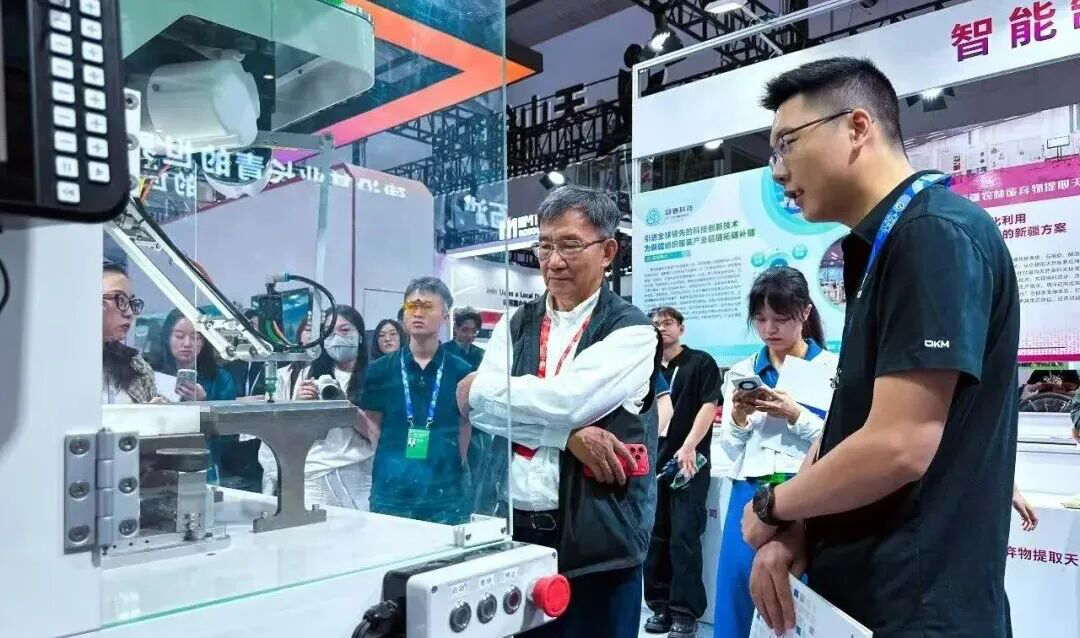
From June 25 to 29, the 9th China-Eurasia Expo was grandly held in Ürümqi, Xinjiang. As a national-level, international comprehensive exhibition open to the Eurasian continent, this year's expo—under the theme "New Silk Road Opportunities, New Eurasian Vitality"—launched its inaugural "New Quality Productive Forces" pavilion. The Hong Kong Centre for Construction Robotics (HKCRC) was invited to exhibit its cutting-edge smart construction technologies in Hall 5, within the AI and State-Owned Enterprise zone of the New Quality Productive Forces section. Alongside 55 hard-tech companies assembled by the Tianshan Science and Technology Innovation Institute, HKCRC showcased the innovative strength of China's hard-tech sector.
Technology Empowerment, Real-World Deployment – HKCRC's Core Strengths
HKCRC is dedicated to bringing advanced technologies—robotics, automation, and AI—into the construction industry to enable intelligent building processes. At this exhibition, HKCRC highlighted two flagship products: the Smart Tower Crane System and the Rebar-Tying Robot.
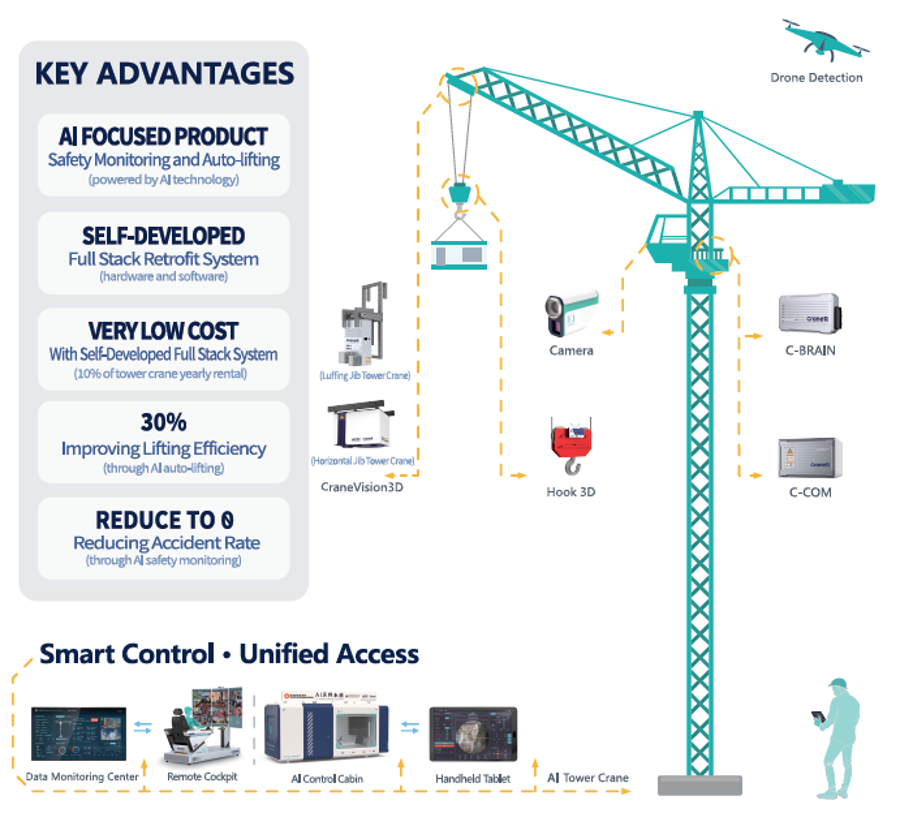
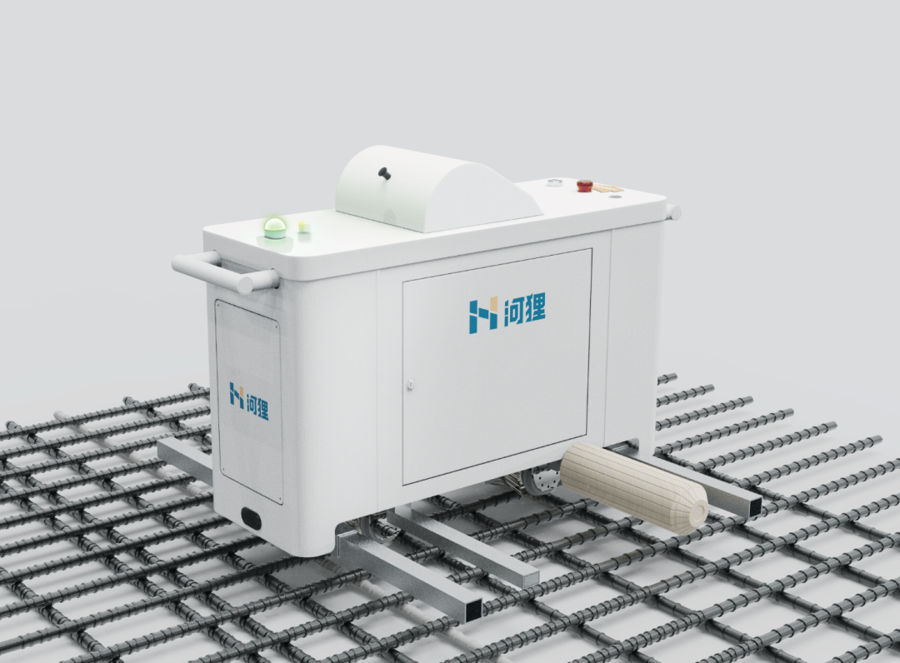
The Smart Tower Crane System integrates safety monitoring, remote operation, and intelligent control to automatically plan to lift paths, allowing operators to work remotely from a safe environment—significantly enhancing both safety and precision. The Rebar Tying Robot, compact, flexible, and user-friendly, employs intelligent rebar-node recognition algorithms and smart control technology. Operable by a single person, it achieves tying efficiency three times higher than manual labour. These products precisely address the urgent infrastructure and urban renewal needs of Xinjiang and Central Asia, drawing considerable interest from government and enterprise representatives, as well as industry experts.
1. AI Tower Crane System
The system integrates an AI-driven 3D modelling and inspection module, an intelligent main control system, and high-precision LiDAR technology. Its core functions include remote-controlled lifting, AI-assisted hook stabilisation, AI safety surveillance, and AI path planning.
2. Rebar Tying Robot RBTS1
The RBTS1 is designed for flat rebar-laying applications across various construction sectors. It performs exceptionally well in residential projects, infrastructure development (including roads, bridges, and tunnels), commercial complexes, medical facilities, and more.
Seizing Silk Road Opportunities, Fostering Eurasian Prosperity – HKCRC's Strategic Vision
Central Asia is currently undergoing a period of rapid urbanisation and infrastructure expansion. Kazakhstan, as the region's largest economy, invests over US$30 billion annually in infrastructure, with its building materials market projected to reach US$8 billion in 2026. The combined building materials market of the five Central Asian countries is growing at over 12% annually and is expected to hit US$15 billion in 2026. Reports indicate that Kazakhstan faces a severe housing shortage, with schools operating in three shifts; its population has an average age of under 30 and a high birth rate, sustaining robust construction demand. The year 2026 coincides with the "China-Central Asia High-Quality Development Year," and in 2025, China's goods trade with the five Central Asian countries surpassed the US$100 billion mark for the first time. These trends present an unprecedented strategic window for Chinese construction technology and smart manufacturing capacity to expand overseas.
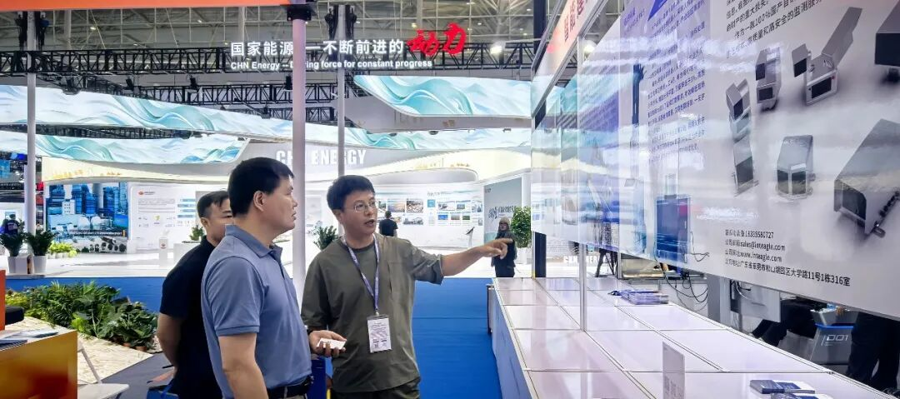
During the expo, the organizers held an international buyer matchmaking and exchange forum, bringing together 150 overseas buyers from Eurasia in Ürümqi. The event featured multiple sessions including forums, signing ceremonies, B2B negotiations, and chamber-of-commerce roundtables, attracting nearly 80 foreign enterprises from the five Central Asian countries and Russia, alongside over 120 quality suppliers from 11 Chinese provinces and regions.
Xinjiang, as the core zone of the Silk Road Economic Belt and a gateway to the West, is emerging as a strategic hub connecting China with Central Asian markets. The Khorgos Port, leveraging its overlapping policy advantages—comprehensive bonded zone, supporting industrial park, development zone, and pilot free-trade zone—has established a cross-border trade platform serving Central Asia, Russia, and European markets. Enterprises in the park can benefit from preferential investment policies such as "five years tax-free followed by five years half-tax." China and Kazakhstan have achieved mutual recognition of standards for 71 categories of building materials, with 56 categories enjoying zero-tariff treatment.
Against this backdrop, HKCRC, as an innovation incubation platform for smart construction, has keenly identified the urgent demand for intelligent construction technologies in the Central Asian building market. The centre is committed to bringing robotics, automation, and AI into construction, having already developed products such as bricklaying and rebar-tying robots. Addressing pain points specific to the Central Asian market—high labour costs, a shortage of construction workers, and local workers' reluctance to engage in heavy physical labour—HKCRC is actively expanding into Central Asia and Xinjiang, exploring application scenarios for construction robots as human-machine collaborative tools in large-scale projects. Leveraging the international networking platform provided by the 9th China-Eurasia Expo, HKCRC has established preliminary contacts with Central Asian buyers and local industrial resources in Xinjiang, laying a cooperative foundation for deeper market penetration in the region.
Driving High-Quality Development Through Technological Innovation – HKCRC's Enabling Role
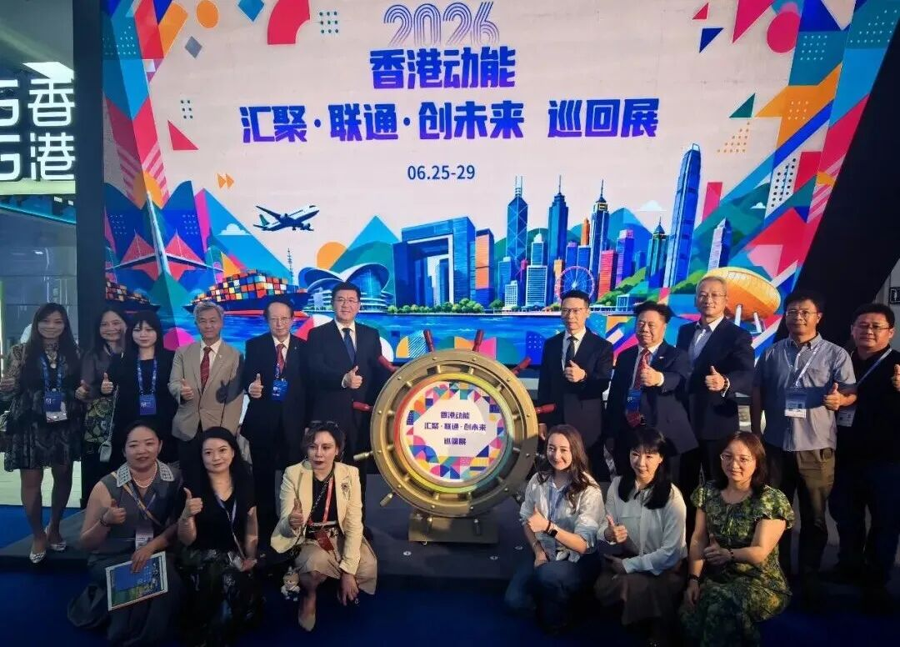
At this expo, the Hong Kong Economic and Trade Office in Beijing (HKETO) set up a thematic exhibition titled "Hong Kong Momentum – Connecting · Bridging · Creating the Future." On the afternoon of June 25, a simple yet grand opening ceremony was held at the HKETO booth (C19-22) at the Xinjiang International Convention and Exhibition Centre, co-hosted by Keyser Kurban, Vice Chairman of the Xinjiang Autonomous Region, and Dominic Yuen, Acting Director of HKETO Beijing.
Against the backdrop of the national "15th Five-Year Plan," which explicitly supports Hong Kong in consolidating and enhancing its advantages in the innovation and technology sector, HKCRC is committed to using technological innovation as a bridge. We aim to deeply integrate Hong Kong's international research vision with Xinjiang's strategic position as a key node along the Belt and Road. From the Greater Bay Area to the Eurasian continent, from smart construction to industrial upgrading, we look forward to empowering regional development with hard technology and joining hands with all partners to write a new chapter of convergence, connectivity, and co-creation for the future.
Today, the global construction industry faces common challenges: labour shortages, high safety risks, and low productivity. HKCRC follows the path "from new engineering education to new quality productive forces," driving the transformation and upgrading of the construction sector through its innovation model of "young talent + hard technology + new products."
Looking ahead, HKCRC will continue to deepen its R&D in smart construction technologies, working in concert with the XbotPark ecosystem and the Tianshan Science and Technology Innovation Institute to empower construction and development in Xinjiang and Central Asia. From the shores of Hong Kong to the foothills of the Tianshan Mountains, from the Guangdong-Hong Kong-Macao Greater Bay Area to the Silk Road Economic Belt, HKCRC is building a bridge of science and technology innovation connecting China with Eurasia—contributing Hong Kong's wisdom and the Greater Bay Area's strength to the high-quality development of the Belt and Road Initiative.



Get In Touch
Have questions or want to explore collaboration? Reach out to our team and let’s build the future of construction together.