Incubated Products Frequently Catch the Eyes of General Secretary: How is the "XbotPark Paradigm" of New Productive Forces Forged?
Jun 10
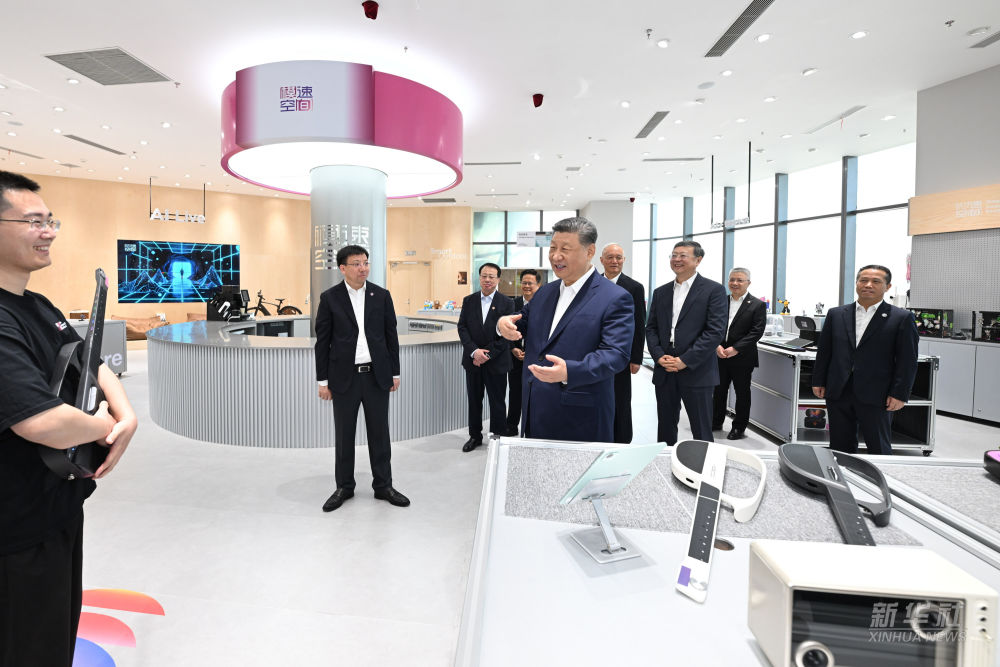
XbotPark is home to a gathering of young entrepreneurs united by a shared faith in technology and a fierce ambition to change the world. Recently, the products they have poured their hearts into developing have repeatedly captured the attention of China's national leaders. From General Secretary Xi Jinping watching a performance of the LiberLive smart stringless guitar during a research tour in Shanghai, to Premier Li Qiang inviting Zhang Junbin, founder of Narwal, to a symposium during his visit to Shenzhen earlier this year, and most recently, Premier Li Qiang observing Direct Drive Tech (Direct Drive Tech) demonstrate the modular splicing technology of its D1 robot in Beijing. This is not just a profound validation of the founders' individual innovative spirits; it serves as a tremendous encouragement for XbotPark and for all trailblazing entrepreneurs forging ahead in the hard-tech arena.
Unknown Planet: 4 Years, 30 Prototypes, and 300 Interviews to Pioneer a New Category
In April 2025, during an inspection tour in Shanghai, Xi Jinping, General Secretary of the CPC Central Committee and Chinese President, visited an AI product experience store inside the "Model Speed Space" in Xuhui District. There, the General Secretary watched a product demonstration of the LiberLive smart stringless guitar with great interest and spoke warmly with the staff. The product that made the General Secretary pause and linger was developed by Unknown Planet, an enterprise incubated at XbotPark.
During the tour, the General Secretary emphasized that Shanghai bears the historical mission of building an international hub for scientific and technological innovation. He urged the city to seize opportunities, let national strategies guide its efforts, continuously enhance its capacity as a wellspring for scientific innovation and a leader in high-end industries, and accelerate its transformation into a globally influential highland for tech innovation.
Unknown Planet, having pioneered the entirely new category of the "smart stringless guitar," is a prime example of this globally influential technological innovation. Its debut product sold out within its very first week on the market. Today, it is a best-seller in over 50 countries and regions, amassing more than 1.3 million users and surpassing 1 billion RMB in cumulative sales. The product was even named one of TIME's Best Inventions of 2025.
Founder Tang Wenxuan once explained his original intent behind the research and development: it wasn't to create an "easier" guitar, but to focus on "opening the gateway to music for a broader demographic." He wanted to explore a potential path where "humans dictate the intent, and machines handle the execution." To turn this vision into reality, the team spent four relentless years refining the product's direction. They crafted over 30 cardboard prototypes of various functional forms, conducted more than 300 in-depth user interviews and validation sessions, and continuously tested the user experience through circuit boards. Only then did the initial prototype of LiberLive emerge.
"To further validate the product's performance in real-world scenarios, the team conducted over 50 outdoor performance tests, closely observing user feedback and product behavior," Tang Wenxuan noted. It wasn't until they saw users "screaming with excitement" that the team finally felt certain they were zeroing in on a truly viable direction.
Enthusiastic market feedback validated the team's choices. The growth trajectory of Unknown Planet also profoundly mirrors the incubation philosophy of the XbotPark robotics base. Engraved on the wall at the entrance of the base's exhibition hall is a famous quote attributed to Albert Einstein: "If I had an hour to solve a problem and my life depended on the solution, I would spend the first 55 minutes determining the proper question to ask, for once I know the proper question, I could solve the problem in less than five minutes." Professor Li Zexiang, the initiator of XbotPark, has pointed out that "product definition" and the "supply chain" are the two ultimate "Valleys of Death" in hard-tech entrepreneurship. For this reason, training centered around "design thinking" has been a consistent thread throughout all the entrepreneurial camps held at XbotPark. Entrepreneurs are highly encouraged to uncover unmet market pain points through exhaustive consumer research.
To help entrepreneurs navigate the treacherous waters of the supply chain, XbotPark has built its own shared factory. When Unknown Planet's stringless guitar sold out instantly upon launch and the company faced immense pressure to ramp up production, the shared factory responded swiftly. Leveraging Dongguan's rich industrial resources, it accurately matched them with high-quality suppliers, mitigating supply chain risks while effectively capturing the sales window. From proof of concept to mass production, the shared factory acts as an "escort" for hard-tech enterprises across the entire lifecycle from prototyping to scaling up, allowing entrepreneurial teams to travel light, move fast, and remain laser-focused on product innovation.
Narwal (Cloud Whale Intelligence): 3 Years to Build the World's First Self-Cleaning Mop Robot
From January 3 to 5, 2026, Li Qiang, a member of the Standing Committee of the Political Bureau of the CPC Central Committee and Premier of the State Council, held a symposium with representatives of technology enterprises and officials from relevant Shenzhen municipal departments during his research tour in Guangdong. Zhang Junbin, founder of Narwal—an enterprise incubated at XbotPark—was invited to attend the symposium as a representative of innovative tech companies.
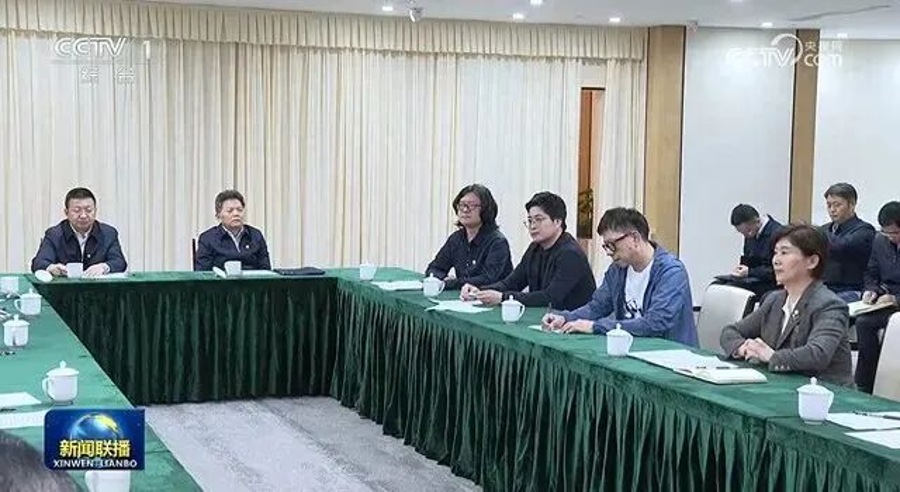
During his research, Premier Li Qiang pointed out that the vitality of technology lies in its application. He called for further improvements to the industrial ecosystem, the cultivation and expansion of application scenarios, and the exploration of effective business models. He emphasized the need to accelerate the iterative upgrading of new technologies and products like robots and drones through broader application, so as to better empower a myriad of industries and benefit countless households. He also encouraged enterprises to seize opportunities, innovate boldly, strive for greater development, and inject strong momentum into the steady and positive growth of the economy.
Looking back at Narwal's development over the past decade, the journey of its robots from the laboratory to millions of households perfectly exemplifies the notion that "the vitality of technology lies in its application." As the industry pioneer of the self-cleaning robot vacuum and mop, Zhang Junbin once spoke in a Xinhua News Agency interview about the hurdles faced during R&D: "To wash a mop, you need water, and water involves issues of sealing and waterproofing. Industrial design and processing techniques couldn't be borrowed from existing products; everything had to start from absolute zero." Even when capital was incredibly tight, he steadfastly supported his R&D team in their continuous testing.
The founder's tenacity, coupled with XbotPark's unwavering companionship, supported Narwal through its darkest hours. When Zhang Junbin had yet to pinpoint his entrepreneurial direction, XbotPark's founder, Professor Li Zexiang, advised him to "take a walk and have a look around first," taking him on visits to international tech firms. Once the robot vacuum track was chosen, XbotPark stepped in with crucial financial backing.
XbotPark has always maintained that hard-tech entrepreneurship cannot be a "short, flat, and fast" game. The teams that truly break out are those that understand the technology, are willing to grind relentlessly, and are ready to trade time for product depth. Therefore, XbotPark, led by Professor Li, is willing to cast a vote of confidence for young people who have almost nothing to their name, as long as there is "a spark in their eyes." The base is always willing to stand shoulder-to-shoulder with them during their toughest times and provide every form of support.
Today, Narwal's products are not only exported to dozens of countries and regions overseas—with its market share holding steady among the top globally—but the company itself has also ascended into the ranks of unicorn enterprises. Furthermore, Zhang Junbin frequently returns to the base to share the pitfalls he encountered on his entrepreneurial journey and the strategic considerations behind his choices with the next generation. This culture of mentorship, passed down from one cohort to the next, has become XbotPark's most treasured asset.
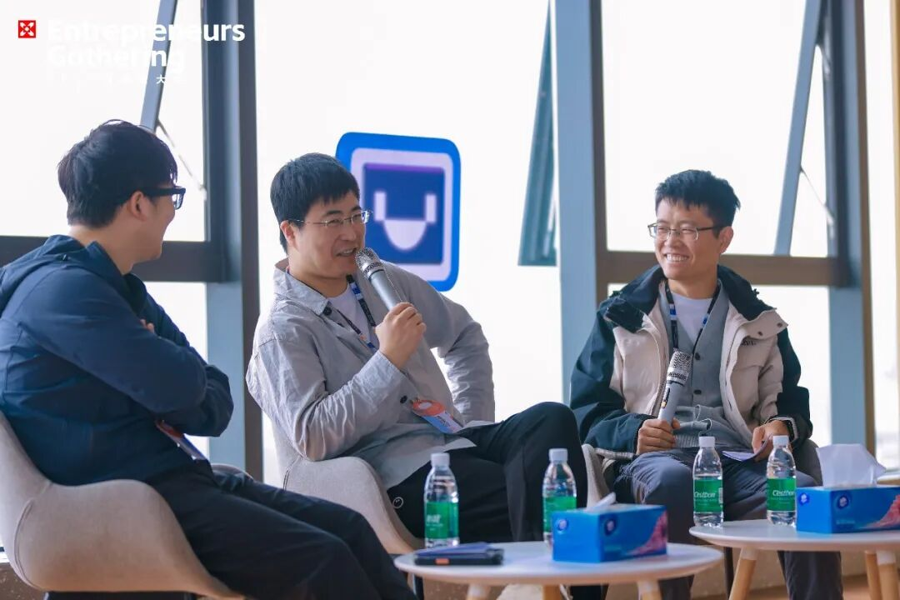
Direct Drive Tech: From Direct-Drive Motors to the World's First Modular Splicing Robot
On May 18, 2026, Premier Li Qiang inspected the integrated development of artificial intelligence and advanced manufacturing in Beijing. The Premier stressed the need to "promote the deep integration of artificial intelligence and advanced manufacturing, adhere to innovative development, highlight an application-oriented approach, actively promote the iterative upgrading of smart robots, and vigorously advance the comprehensive and deep-level empowerment of manufacturing by artificial intelligence."
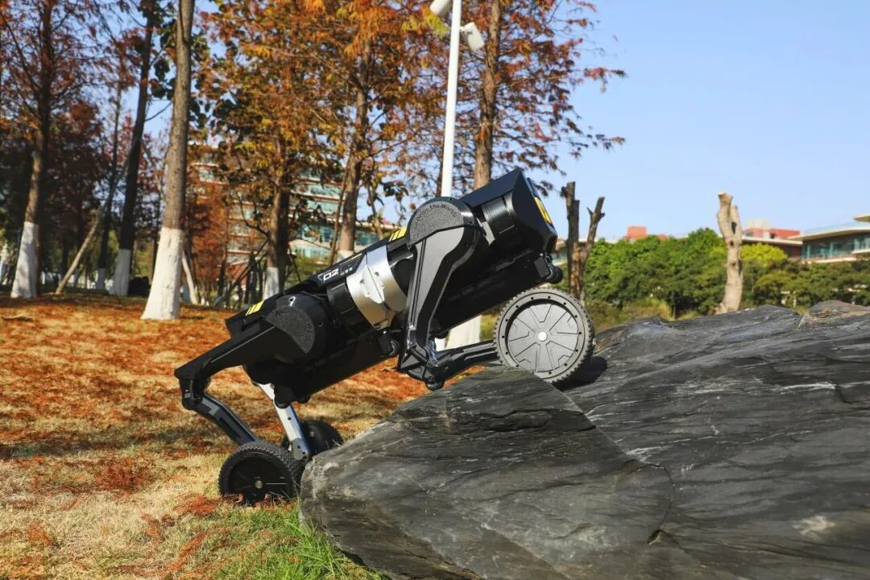
At the exhibition site of the Yizhuang Robot World, a robot capable of "being disassembled, spliced, and freely switching between wheels and legs" caught the Premier's eye. This robot, named "D1," was independently developed by Direct Drive Tech, another XbotPark-incubated enterprise. On-site staff demonstrated its applications in splicing, detaching, obstacle traversal on the move, and agile jumping. The Premier inquired in detail about breakthroughs in core technologies, industrialization progress, and scenario implementation, encouraging the company to continue strengthening its grip on key core technologies, accelerate the large-scale application of new tech and products, and iteratively improve and optimize through practice.
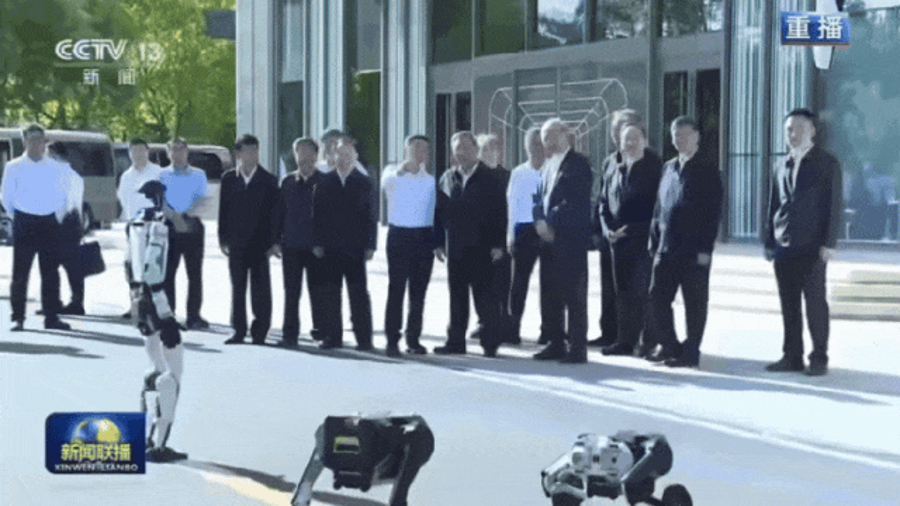
The Premier also mentioned encouraging government departments and state-owned enterprises to open up scenarios, promote pilot verification of new technologies and products, support the accelerated, large-scale application of smart robots under the premise of guaranteed safety, and continuously discover, solve, and improve upon problems through practice.
As the world's first embodied intelligent robot with whole-machine modularity, the D1 shatters the limitations of traditional robotic forms. It supports rapid splicing and detaching across multiple configurations—such as wheel-leg to wheel-leg, or legged to legged—adapting to complex terrains and diverse tasks. Equipped with a self-developed integrated joint module and direct-drive hub motors, its movements are not only precise, fluid, low-noise, and stable, but the whole machine's load capacity also ranks at the forefront of the industry. Furthermore, backed by proprietary universal cerebellum technology, it achieves millisecond-level coordination between modules; even after separation, dual machines can cooperate precisely and operate efficiently. In terms of scalability, it can be outfitted with perception equipment like LiDAR and depth cameras, achieving 360° environmental recognition, automatic obstacle avoidance, and posture self-reset for stable operation across all scenarios. For example, mounting the MetaCam from Skyland Innovation—another enterprise within the XbotPark ecosystem—onto the D1 enables much more convenient 3D spatial modeling capabilities.
Zhang Di, founder and CEO of Direct Drive Tech, studied under Professor Li Zexiang. In an interview, he once recounted the origins of his entrepreneurial journey: While studying at the Hong Kong University of Science and Technology, he developed a posture controller used to maintain a robot's balance, a device that relied on gears and a reducer to regulate speed. Late one night, he decided to try removing the reducer, only to discover to his surprise that the robot performed even better without it.
With the support of Professor Li Zexiang, Zhang Di followed this train of thought, continuously refining his market research and concepts, eventually establishing direct-drive technology as his core entrepreneurial direction. Relying on direct-drive modules to output precise power for robots not only boosts the machines' running speeds and operational efficiency but also extends equipment lifespans and slashes backend maintenance costs.
Direct Drive Tech independently executed the end-to-end design and mass production implementation of its direct-drive power modules—from sensors and drivers to the motor body itself—which in turn drove a quantum leap in the company's whole-machine robotics technology. Its technical logic is crystal clear: highly dynamic movements like walking, running, jumping, and clearing obstacles rely heavily on the response speed, output torque, and durability of the robot's joints. Following this technical roadmap, the company's business gradually expanded from direct-drive motors to wheel-leg robots, and subsequently to the release of the modular, detachable D1 robot, constantly pushing the boundaries of its business footprint.
Today, Direct Drive Tech's proprietary direct-drive solution stands in stark contrast to traditional reducer solutions, offering an entirely new alternative for a multitude of sectors, including domestic robots, commercial and industrial robots, and smart fitness. Its robotics products continue to be deployed across a widening array of application scenarios, and the company currently holds the title for the highest shipment volume of wheel-leg robots globally.
Understanding technology, applying that technology to products, and scaling those products into an industry—this is exactly why XbotPark has spent years deeply immersed in "new engineering education." The goal is to systematically cultivate a cohort of such hard-tech talents to contribute to the nation's development of new productive forces.
Although their tracks may differ, the enterprises incubated at XbotPark follow remarkably similar developmental trajectories: starting from genuine, unmet needs to forge products that represent true, disruptive innovation. They didn't succeed by merely standing in the temporary crosshairs of a trending buzzword; they succeeded through a methodology of old-fashioned, meticulous groundwork tempered relentlessly by time. During the product definition phase, they leverage "design thinking" to repeatedly interrogate the "true pain points of the user." To better realize a certain product feature, they repeatedly experiment with different technologies and manufacturing processes. It is precisely through this crucible that the "XbotPark Paradigm" of new productive forces is forged.
And at XbotPark, there are many more stories just like these. How is "intelligent manufacturing in China" blazing new trails and leading global trends? The answers are written in each and every one of these stories.



Get In Touch
Have questions or want to explore collaboration? Reach out to our team and let’s build the future of construction together.