Skyland Innovation Emerging from HKCRC: Time Encapsulates the Struggle, Technology Delivers on the Promise
Jun 08

Songshan Lake, Dongguan, 2020. Rain hammered against the corrugated iron roof of an unfinished construction site, the sound hollow and desolate.
Inside a modest conference room, Pan Jie and his partners sat huddled together. Spread across the table were several technical blueprints—stark black text on white paper—detailing the robotics technologies they excelled at: algorithms, SLAM, and autonomous drone navigation. Outside the window, the silhouette of a tower crane loomed like a silent giant, peering down at the young innovators attempting to transform it through technology.
That year, they held the core technology for the world’s first indoor autonomously navigating micro-drone. It had earned them a Best Paper award at a top robotics conference and the highest accolades from academia. By all accounts, it was an incredibly prestigious starting point.
Wielding this razor-sharp technological blade, however, they had no idea where to strike first. They experimented with drone-based site inspections, exterior wall surveys, and even tried building a 3D site monitoring platform. But after countless rounds of client visits, the responses they received were strikingly uniform: "It's a great product, but we're not buying it."
It was also during this phase that they considered developing large-scale robots, only to quickly scrap the idea. The rationale was simple: mass production, logistics, and the intricate engineering systems of large robots require agonizingly long debugging cycles. It was a heavyweight burden that a fledgling startup simply couldn't shoulder.
Chapter One: The "Futile" Endeavors
They once built a 3D construction site viewing platform.
By overlaying BIM (Building Information Modeling) with oblique photogrammetry, they created a web-based platform with stunning visual effects. Major clients, such as China State Construction, nodded in approval during demonstrations. When projected on a massive screen during executive briefings, it looked absolutely spectacular. For a brief period, this project became the team's first revenue-generating venture.
Yet, while executives loved to look at this platform, middle management hated using it, and frontline workers ignored it completely. It failed to solve actual construction problems: it didn't help foremen spot a crookedly built wall, nor did it alert safety officers to hidden hazards on the scaffolding. It was merely "aesthetically pleasing."
Middle management's demands were fast and highly customized, making it impossible to standardize features. One site needed a specific function today, and another site demanded a completely different one tomorrow. The team was exhausted running in circles, producing software that functioned like disposable raincoats—used once and thrown away.
A product that solely caters to decision-makers can turn a profit, but the intrinsic value it creates is highly limited. A truly exceptional product must simultaneously satisfy the needs of the end-user, the purchaser, and the decision-maker.
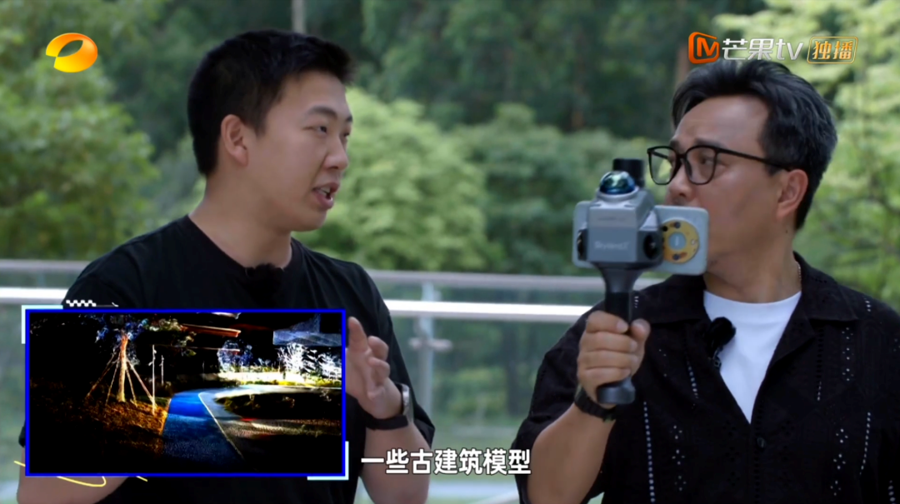
Chapter Two: Recruitment, A Drawn-Out Ordeal
"When building construction robots, it's incredibly difficult to find people with the relevant background," Pan Jie remarked. His tone remained calm, merely stating a fact. Once, they mentored an intern with immense potential, pouring in significant resources and guiding him hand-in-hand, fully expecting him to become a future core pillar of the team. Ultimately, however, he left to pursue a Ph.D. due to personal career aspirations.
Later, they found a workaround: the HKCRC joint training program. During the first enrollment cycle, more than half of the candidates were drawn to his startup. The talent drought was finally somewhat alleviated. Recruiting, training, releasing talent back into the workforce, and recruiting all over again... this endless loop felt like the never-ending piles of excavated soil on a construction site, slowly grinding down every entrepreneur's patience.

Skyland Innovation's handheld 3D scanner, the MetaCam Air 2, boasts four core features:
Panoramic Perception & Gaussian Splatting Brilliance: Equipped with flagship panoramic and LiDAR sensors, seamlessly integrated with multi-modal fusion and Gaussian Splatting technology. It supports versatile formats including JPG, LAS, RCP, PLY, and USD, providing the optimal physical entry point for world models.
True Microsecond-Level Synchronization for Native Data Accuracy: Utilizing a hardware-level multi-sensor synchronization system, it achieves microsecond-level temporal alignment. This guarantees native data consistency right from the source, resulting in highly accurate and reliable fusion.
SOTA-SLAM Algorithm, Tempered in the Field: Built on real-world data from over 5,000 devices and spanning over 100 million square meters, the system deeply integrates AI to forge a State-of-the-Art SLAM algorithm, drastically enhancing mapping stability in complex environments.
Effortless Efficiency & Boundless Exploration: Supports resume-from-breakpoint scanning and automatic stitching, shattering the spatial and temporal limits of field operations. Users no longer need to worry about scan interruptions or battery anxiety, allowing for smoother, highly efficient workflows in large-scale environments.
Chapter Three: A Ray of Light Called the Spatial Camera
After immersing themselves in construction sites for over a year, they uncovered a multitude of issues. Drone aerial photography has a low barrier to entry, but it fails to capture ground-level and indoor intricacies. Meanwhile, the construction industry frequently requires internal cross-referencing between actual scan results and BIM models—any discrepancy means rework. Many companies are developing construction robots, but how do these machines perceive and interpret their surroundings? How do they act intelligently? How can industries that have never been truly digitized suddenly become smart?
Pan Jie didn't jump straight into creating a "holistic solution for the construction industry." He knew the team's capacity was limited, and one cannot run before they can walk. Therefore, they opted for a seemingly "niche" entry point: a handheld device dedicated entirely to the single task of scanning.
They also took a bold leap in innovation. Traditional scanners were bulky, monofunctional, color-blind, and offered an abysmal user experience. Leveraging robotic perception algorithms and hands-on engineering experience from robotics competitions, the Skyland team managed to strip the weight down to just over 900 grams. Featuring an integrated handheld processor, real-time color rendering, and a magnetic phone mount—features clients never even knew they wanted—the product immediately turned heads across the industry upon debut.
"Users won't tell you they want a lighter, full-color scanner, because their imagination is confined by the products currently available. Your job is to shatter that limitation," Pan Jie explained.
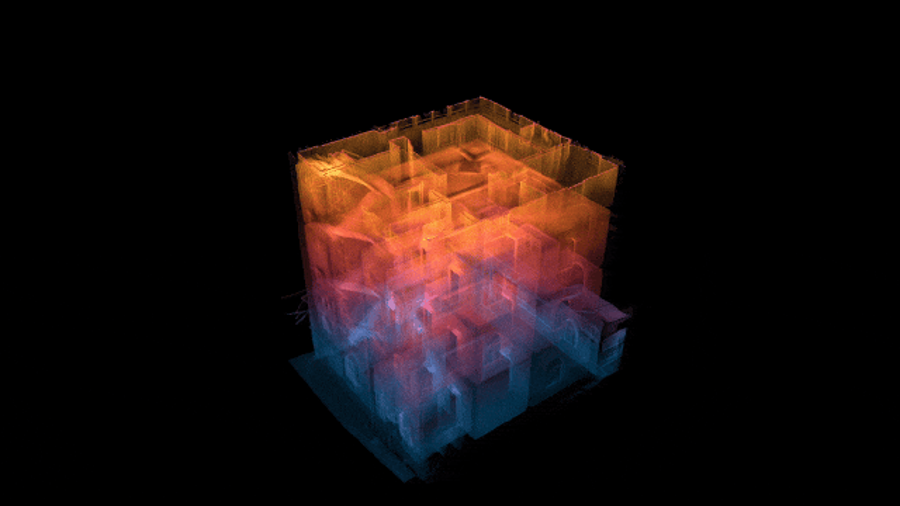
Today, the company's spatial cameras not only heavily empower traditional industries but have also sparked partnerships with dozens of leading embodied AI companies. They are mass-produced and integrated into the products of top-tier clients specializing in wheeled and quadruped robots, serving as the "brain" for humanoid and other embodied robots, enabling these machines to truly see and comprehend the world.
Chapter Four: The Darkest Hour and the Path to Nirvana
In the early days of their startup, as a young, tech-centric team eager to quickly unlock the market, they embraced an ethos of open collaboration and mutual success. They opted for an OEM (Original Equipment Manufacturer) partnership with a supply chain enterprise renowned for its marketing prowess. The R&D team worked through the night on technical integration, while the operations team relentlessly polished the project details, pouring the company’s most precious R&D resources and human capital into the endeavor.
To the team's shock, however, the partner suddenly shifted their original intentions and plans, making continued collaboration impossible. This abrupt halt prompted Pan Jie to entirely abandon the OEM market strategy, pivoting instead to independently develop and market their own proprietary brand.
Anchored by their profound R&D foundations, they successfully achieved generational leaps in cutting-edge algorithm research, sensor design, and data-driven algorithms. Through stellar product reputation, Skyland's proprietary brand managed to completely overtake competitors in market presence.
Skyland Innovation's products continue to evolve and upgrade:
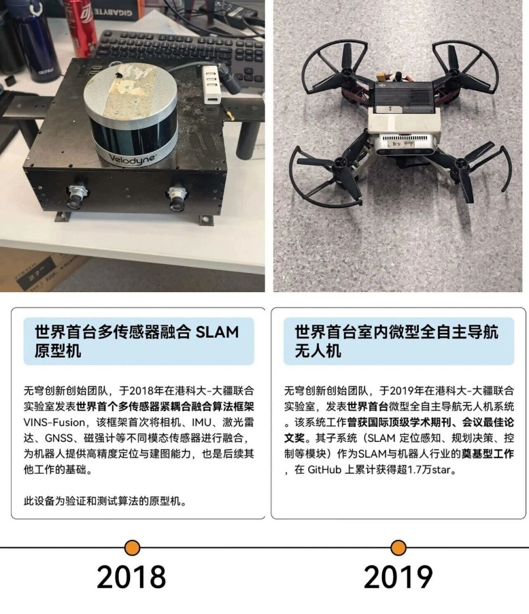
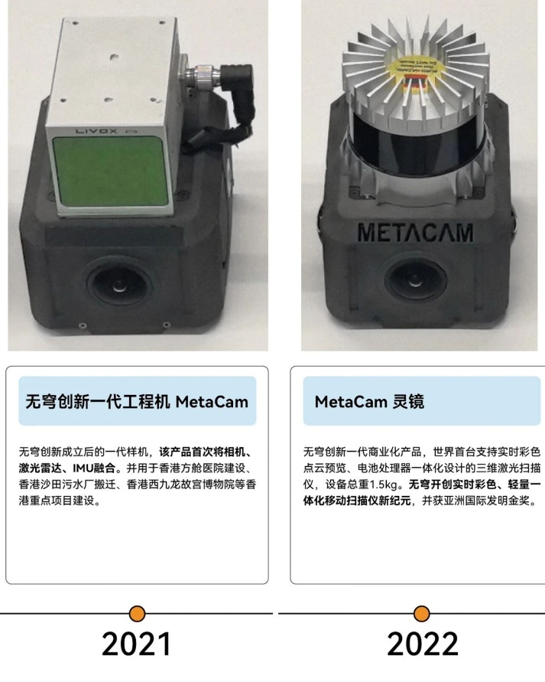
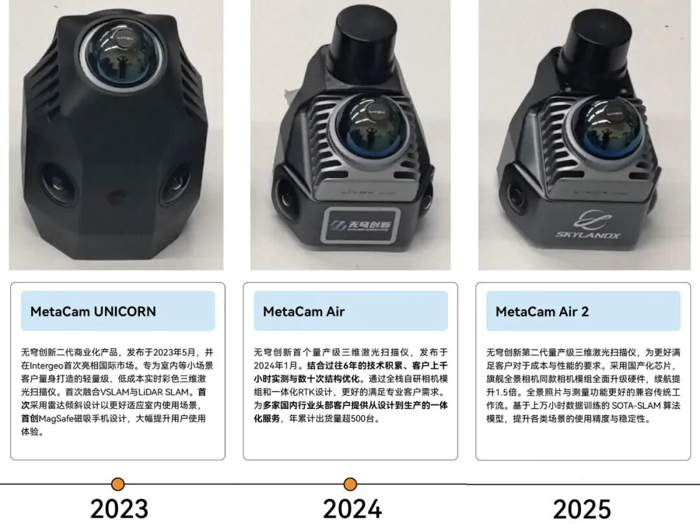
From that point onward, Skyland Innovation embarked on a more treacherous, yet significantly more resolute path—deepening their core proprietary technologies, fortifying their technical moats, and holding steadfast to their commitment to originality. The team relentlessly iterated on technology, perfected their intellectual property protection systems, and refined every product solution. Thriving in the alkaline soil of adversity, Skyland planted the seeds of innovation deeply, allowing them to grow into a robust root system that no one could ever take away.
Chapter Five: The Reverence for Mass Production
Nearly 5,000 units shipped — a small number, but for a lab-born team, every step has been a struggle. Scaling from 100 to 1,000 units brought floods of problems: unstable quality, low yield, missed deadlines. Pan Jie said, "It's mostly management." But behind that calm remark were 2 a.m. crisis calls, scrapped parts, and furious customers — all tuition paid on the brutal road to scale. "You must hold mass production in reverence," he stresses. Reverence born from hard lessons: a lab prototype can be perfect, but every unit on the line must survive dust, vibration, and heat, cycle after cycle.

The Glory of Branches Reaching Upward Stems from Roots Growing Downward
Pan Jie's team, emerging from HKCRC, is like a seed sprouting amidst a mountain range. Navigating through perilous peaks and treacherous ridges, they have imbued silent steel with the unyielding will of the mountains.
They have had cold water poured on them by the market, had their throats squeezed by funding shortages, and bid bittersweet farewells to former comrades as their paths diverged. They have built projects "approved by executives" and developed "technologies no one would buy." They have endured the drought of recruitment and the sting of losing talent they painstakingly nurtured. Yet, they survived. And more than that, they began to rewrite the rules of the industry.
By condensing cutting-edge robotics technology into a 900-gram scanner, they ensured that construction sites are no longer solely reliant on crude tape measures and veteran workers acting on pure intuition. This 900-gram scanner transformed margins of error from "approximate" to "precise," and reduced rework from the "norm" to an "exception." Executive briefings are now backed by intuitive data, while frontline workers are spared redundant labor. Technology is finally no longer a "deity enshrined in a laboratory for admiration," but a readily accessible tool on the construction site. This is the true essence of empowerment.
But the source of this energy is not just that 900-gram scanner. The original obsession of Pan Jie's team was to drive a deep stake into the realm of robotics: to make machines truly understand spatial environments and give steel the power of judgment. To this day, they have never, for a single moment, abandoned this untamed frontier. That scanner is their "first puzzle piece" on the construction site; more importantly, it is the "first pair of eyes" through which robots can perceive the world. What they are architecting is the foundational infrastructure for spatial intelligence: providing a "spatial brain" for robots and a physical entry point for world models. This allows every device to rehearse thousands of times in simulated environments before executing hair-trigger, pinpoint-accurate actions in reality. Starting from the construction site, yet never confined to it—homes, warehousing, logistics, inspections, emergency response—every corner that requires machines to interpret their surroundings and make autonomous decisions will be quietly illuminated by this capability.
As for the questions yet to be answered, the iterations still in the pipeline, the impending scale-up of mass production, and the new challenges ahead—those are left to them. They are left for the next construction site to be illuminated by technology, left for the countless brave and unwavering entrepreneurs, like Pan Jie, emerging from HKCRC under the era’s grand theme of intelligent construction. They are also left for the vast, uncharted wilderness that robots are about to venture into, and for every inch of land that requires a "spatial brain" to comprehend and act upon.
1 mission. 900 grams. Nearly 5,000 units. One field—robotics—cultivated with unyielding dedication. This is not a technological drift; this is the downward growth of roots.
The rain is still falling over Songshan Lake. But the lights at the construction site are already on. And countless more lights are beginning to shine.



Get In Touch
Have questions or want to explore collaboration? Reach out to our team and let’s build the future of construction together.