Professor Li Zexiang Attends Guangdong High-Quality Development Conference, Shares Insights on Exploring a "New Manufacturing" Ecosystem
Feb 25
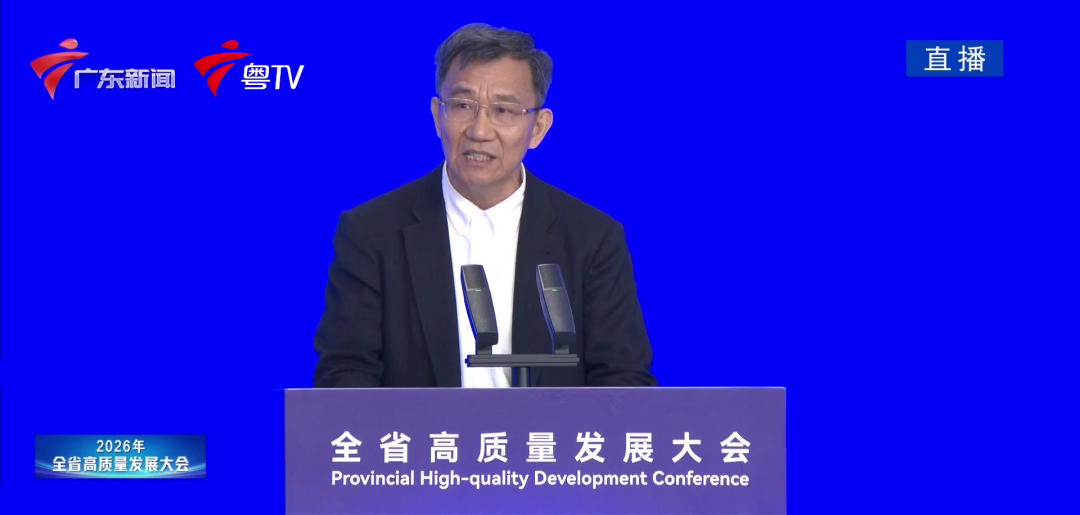
On 24 February, the Guangdong Provincial Committee of the Communist Party of China and the Guangdong Provincial Government convened the Provincial High-Quality Development Conference, with a central theme focused on the coordinated development of the manufacturing and service sectors. Professor Li Zexiang, Founder of the XbotPark Robotics Base, Dean of the Shenzhen Institute of Technology and Innovation, Director of the Hong Kong Centre for Construction Robotics, and Professor at the Hong Kong University of Science and Technology, attended the conference. He delivered a presentation on "Building a 'New Manufacturing' Ecosystem and Promoting Deep Integration of Manufacturing and Services," sharing his practical experience in driving the transformation and upgrading of the manufacturing industry.
Leveraging the Greater Bay Area's Advantages to Facilitate Manufacturing Transformation
Professor Li Zexiang noted that China's manufacturing value added accounts for over 30% of the global total, while Guangdong, as the country's largest manufacturing province, contributes more than 12.5% of the national total. The Greater Bay Area possesses uniquely advantageous supply chain capabilities. By establishing shared factories that integrate supply chain resources, the region provides start-ups with one-stop services ranging from concept validation to mass production, forming a vital foundation for advancing manufacturing transformation.
Professor LI observed that the transformation and upgrading of traditional manufacturing is a long-term, systemic undertaking. Reflecting on his early experiences, he recalled that when the Greater Bay Area's manufacturing sector was heavily reliant on external markets and components, the first hurdle to overcome was "the technology of making machines"—specifically, motion control technology. In 1999, the Shenzhen-Hong Kong Industry-University-Research Base was jointly established by the Shenzhen Municipal Government, Peking University, and the Hong Kong University of Science and Technology. This initiative created a comprehensive ecosystem encompassing technology R&D, industrial incubation, investment and financing services, and talent development. Googol Technology was born from this effort, commercialising laboratory technologies and providing systematic training for grassroots entrepreneurs. In 2023, Googol Technology was listed on the ChiNext board, and its technology now supports equipment development across more than 60 industries.
Nevertheless, the path to transformation remains long and challenging. At the end of 2025, Professor Li visited 17 manufacturing enterprises within the province and found that they commonly faced low gross profit margins (around 20%), low per-capita output value (US$100,000), and limited scale. The pressing question of whether to "transform" or "relocate" has become a major strategic issue, with companies struggling to balance innovation with an adequate supply of skilled talent.
Cultivating Student Entrepreneurs to Drive "New Manufacturing"
After years of exploration, a sobering realisation gave rise to the Songshan Lake Robotics Base: that professor-led entrepreneurship, while valuable, is ultimately a low-probability path to success. Rather than betting on a handful of exceptional individuals, the more effective approach is to systematically cultivate young student entrepreneurs.
In 2014, Professor Li established the Songshan Lake Robotics Base in Dongguan to train student entrepreneurs focused on consumer-facing (C-end) products. He partnered with Guangdong University of Technology and Dongguan University of Technology to incorporate robotics competitions into the curriculum. Drawing on domestic and international educational reform experiences, and combining these with the supply chain strengths of the Greater Bay Area, he gradually developed an autonomous new-engineering education system. He also designed a structured incubation process for entrepreneurial teams, progressing from training camps to pre-exploration and then to full exploration, thereby reducing the barriers to entrepreneurship in a step-by-step manner.
Of the more than 60 teams incubated between 2014 and 2020, the survival rate reached 80%, with 15% achieving unicorn status, and the top few now valued at over US$10 billion. In December 2025, CiDi and Woan Technology were both listed on the Hong Kong Stock Exchange on the same day; Woan's market capitalisation surged from 16 billion to over 40 billion yuan.
Young people understand best what their peers desire, and they are becoming the engines of "New Manufacturing." By nurturing young entrepreneurs and building internationally recognised consumer brands, this approach in turn drives the reform of new-engineering education, shapes the new manufacturing system, strengthens a domestic-demand-led economic structure, and fosters globally competitive Chinese innovation brands.
Beyond the Numbers: The Dawn of a New Era
Professor Li's innovation ecosystem model—"one location + one (or multiple) universities + one platform + one park"—has now taken root in eight cities across China, with partnerships extending to more than 30 universities.
Since 2021, platforms established under this model have incubated 114 start-ups. Their combined sales revenue reached 139 million yuan in 2024 and grew to 784 million yuan in 2025, a 5.6-fold increase. For two consecutive years, the team has organised over 40 start-ups to participate in the CES exhibition in the United States, where they received an enthusiastic response. On the globally renowned crowdfunding platform Kickstarter, ventures within this ecosystem have achieved an average funding amount of US$1.8 million—more than 70 times the platform average.
From Laboratory 3126 at the Hong Kong University of Science and Technology, to the educational reform programme at Harbin Institute of Technology (Shenzhen), and then to various bases across the country, the cumulative total of hard-tech enterprises incubated exceeds 270, with a combined valuation of over 350 billion yuan. Four have gone public, and 12 have become unicorns or soon-to-be unicorns. This, however, is merely the beginning of a new era.
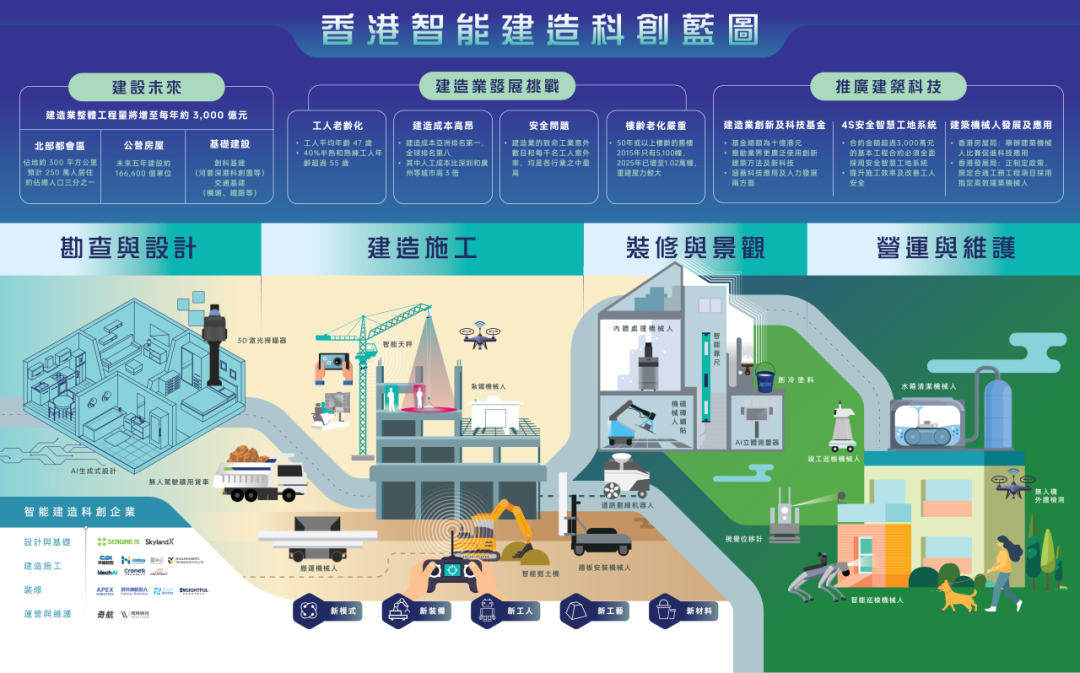
The Hong Kong Centre for Construction Robotics will remain based in Hong Kong while drawing on the resources of the Greater Bay Area. Leveraging its internationally oriented research capabilities and connecting with the Bay Area's complete industrial chain and diverse application scenarios, it aims to accelerate the deployment of innovative achievements in the field of intelligent construction. As "Hong Kong innovation" and "Greater Bay Area manufacturing" become more deeply integrated, the blueprint for high-quality development will gain yet another significant contribution from the realm of intelligent construction.



Get In Touch
Have questions or want to explore collaboration? Reach out to our team and let’s build the future of construction together.