The Water Tank Cleaning Robot: Turning High-Risk Confined-Space Work into a Clear Testament to Water Quality
May 14
When a young man who came from the construction site truly heard the weight of darkness for the first time. When words like confined space, heat, suffocation, and bacteria stacked together. When it was no longer just a risk checklist, but a life-and-death gamble that countless workers face every three months. Then, change began.
That Summer, a Light That Wouldn't Go Out in the Basement
A scorching summer day, in a basement on some construction site. The underground space was like an upturned iron pot—stifling, suffocating. William Chen crouched in a corner, sweat streaming from under his hard hat, his work shirt soaked through, grout dried white on his back. A few steps away, Wu was bent over in a poorly ventilated basement, scraping putty—the air thick with must and alkali.
"Wu, come up and take a break," William called out. "Almost done—just this last corner," Wu replied without looking up, his putty-covered hands gliding across the wall. The sweltering iron pot was quietly sealing its lid... In that moment, a voice surfaced in William Chen's mind—soft, yet aching, and never to fade away: Why should the dirtiest, hardest, and most dangerous jobs always fall on human shoulders?
William Chen was never the type to imagine construction sites from a high-rise office. He majored in civil engineering, and after graduation he threw himself straight into the field: he'd climbed scorching scaffolding, guarded foundation pits through torrential rain, and poured concrete in the dead of night. His years on the front lines taught him the true cost of labour. He'd seen too many workers descend from heights with trembling hands, and too many emerge from confined spaces pale and gasping for air.
Heat, humidity, confinement, high risk, repetition, back-breaking toll—these words are cold statistics in industry reports. But to him, they were Wu's hunched silhouette, and faces blurred by sweat. The simple conviction that grew in him over those years was this: technology should strive for advancement, but more than that, it should safeguard human dignity.
From Civil Engineering to Smart Construction – An Eight-Year Journey
William Chen describes his entry into robotics as "a stroke of luck." But some strokes of luck, in retrospect, feel like destiny.
It was around 2018, when construction robots still sounded like a concept from science fiction. William didn't have a formal background in robotics. But he had something many formally trained engineers lacked: he truly understood the construction site.
He knew how fierce the wind howls on scaffolding, how suffocating the air is in underground utility tunnels, and that what workers fear most isn't exhaustion—it's the gnawing dread of "what if something goes wrong." None of this knowledge is found in textbooks, but it gave him one uncompromising standard when designing robots: this machine must be more reliable than a human, and it must genuinely spare workers a single bead of sweat.
Eight years. From assistant engineer to project lead. He developed multiple construction robots—from zero to one, from blueprints to job sites, and ultimately to commercial deployment. Over those eight years, one conviction grew ever stronger: robots aren't meant to replace people, but to free them from the most dangerous, gruelling, and repetitive work.
Every time he saw a robot working steadily on site, he thought of Wu's silhouette in that dark corner. Every movement, every ascent and descent, every task performed by those robots was silently answering the same question: Can we keep workers from ever having to take that risk again?
The Night That Made His Pillow "Soak with Unease"
What truly made him commit to a single direction was an exchange with people outside his usual circle.
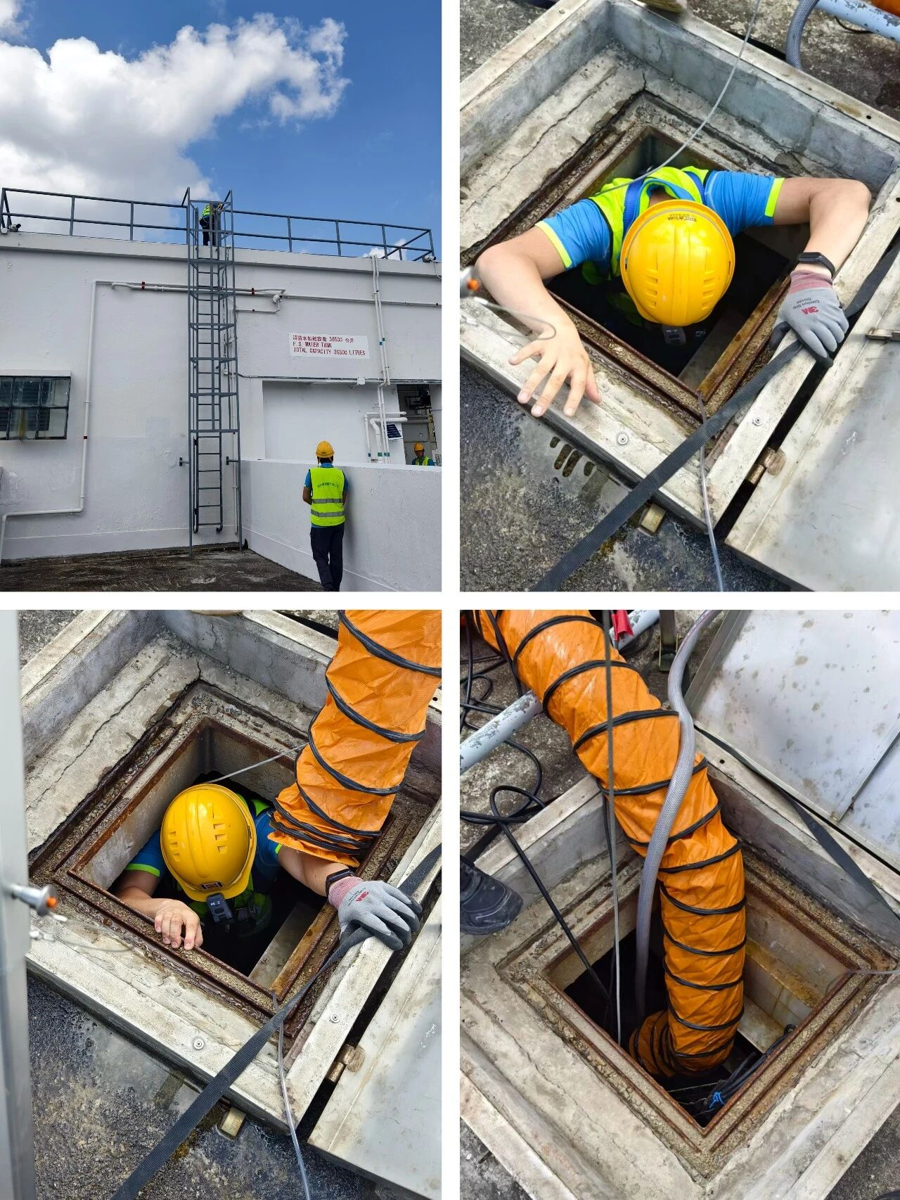
That day, he learned about the real working conditions of water tank cleaning in Hong Kong. As the descriptions came one after another, he froze. Confined-space work, heat, extreme danger, bacterial infection, suffocation, poisoning, high-altitude climbing—these words stacked together covered nearly every nightmare of construction safety, and they all converged in a single scenario.
In that moment, he was back in the basement with Wu—the scarred, putty-caked hands, the ache he felt in his own heart... What made it even more agonising was that this wasn't a rare, once-a-year occurrence. In Hong Kong, water tank cleaning must be performed every three months. High frequency, non-negotiable necessity, extreme danger. That meant every three months, a new shift of workers had to crawl into that confined space and face the same risks. Not once or twice—cycle after cycle.
William Chen barely slept that night.
Lying in bed, a single image kept replaying in his mind: a person entering a dark space through a tiny opening, breathing thick, damp air, slipping on wet sediment, surrounded by cold walls and invisible bacteria and mould. And this had to be done every three months.
Globally, accidents during water tank cleaning are by no means rare.
That night, he etched a line into his mind: Someone has to solve this.
I Climbed into the Tank, and That's When I Truly Touched the Shape of Fear
William Chen made a decision that many around him didn't understand.
"You're a robotics engineer—why are you getting a certified worker's permit?"
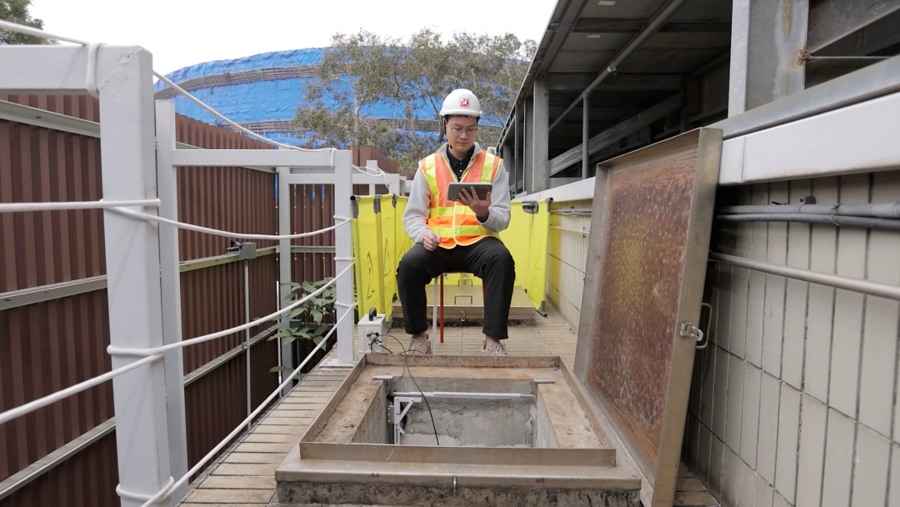
William didn't explain much. He went ahead and obtained Hong Kong's Approved Worker Certificate—under Section 4(1) of the Factories and Industrial Undertakings (Confined Spaces) Regulation. Then he began entering water tanks alongside the workers regularly.
Only by truly stepping into that space do the sensations become searingly, viscerally real.
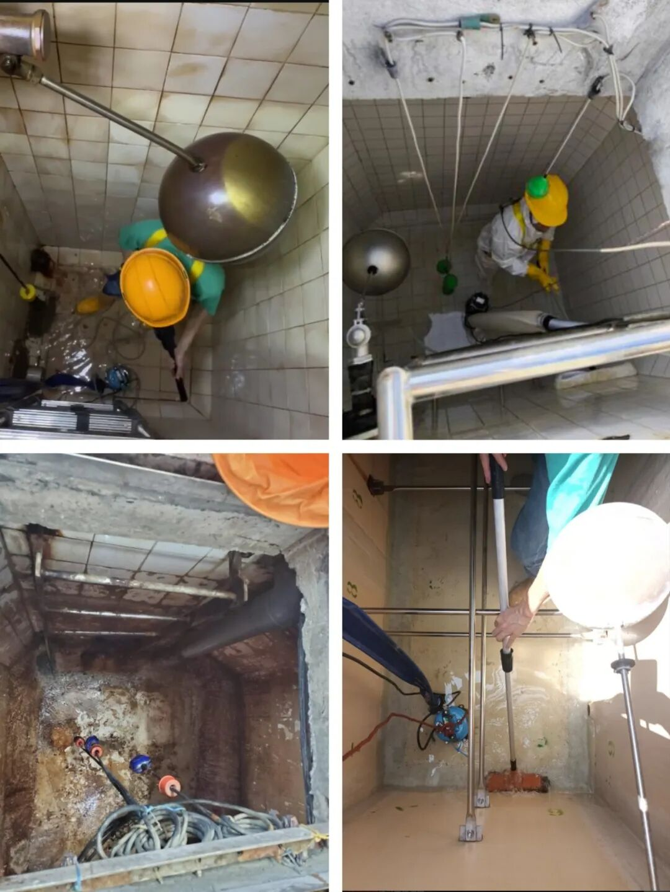
The air is thick and damp, like being wrapped in a wet blanket. Wherever the flashlight beam falls, dust swirls in the light. Beneath your feet is slippery sediment; above, cold concrete. The space is so tight that turning around is a struggle. With every breath comes a blend of rust and disinfectant—a smell you can't quite name but that makes you instinctively hold your breath.
He knew that this space—high in heat and humidity, thick with stagnant air—harboured bacteria, mould, and residual gases that could compromise a person's health at any moment. The afternoon he crawled out of the tank, he leaned against the wall, gasping in the fresh air. Sunlight fell on his face; he squinted and said nothing. But in his heart, a decision was made: this job must be given to a robot. In that moment, he understood why this work is so heartbreaking. Not because the technology is backward, but because the entire industry—and society at large—had simply defaulted to the assumption: someone has to go in. And he was no longer willing to accept that default.
Not One Person's Vision, but the Collective Lift of Six Partners
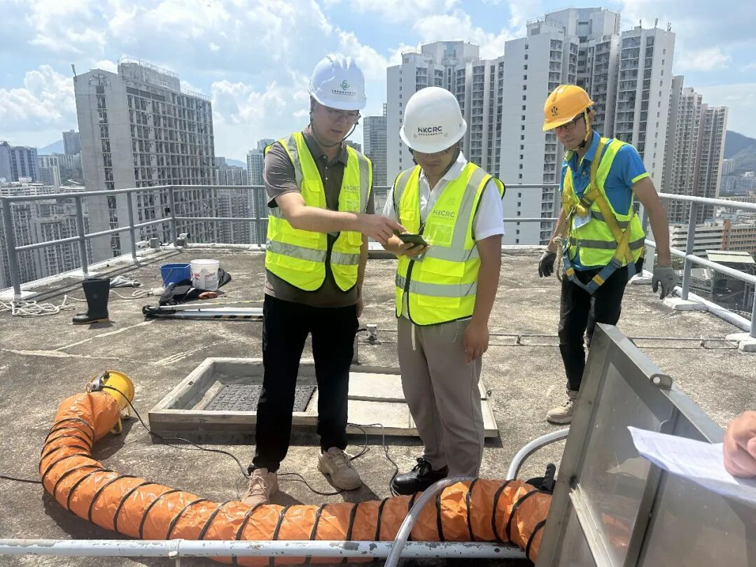
William Chen wasn't the only one who saw this need. What truly convinced him that "this must be done" wasn't just his own judgment. His current institution, the Hong Kong Centre for Construction Robotics, has formed a joint R&D team with the Architectural Services Department, the Electrical and Mechanical Services Department, the Housing Department, the Housing Authority, and the Hong Kong Science Park. The fact that multiple government departments and institutions are collectively involved speaks volumes: this need is real, urgent, and unavoidable.
Every new partner that joined was like a hand pushing them forward from behind. Government officials, engineers, technicians, and veteran cleaning workers—they all saw the same pain point and believed that technology could offer a new solution. This is not a narrow technical project; it's a systematic undertaking that spans public safety, operational efficiency, and worker protection.
William Chen said it was the first time he truly felt that "technology serving the people" is not a slogan, but a reality in the making—driven by many hands working together.
It Speaks No Words, Yet Walks into the Deepest Darkness for Us
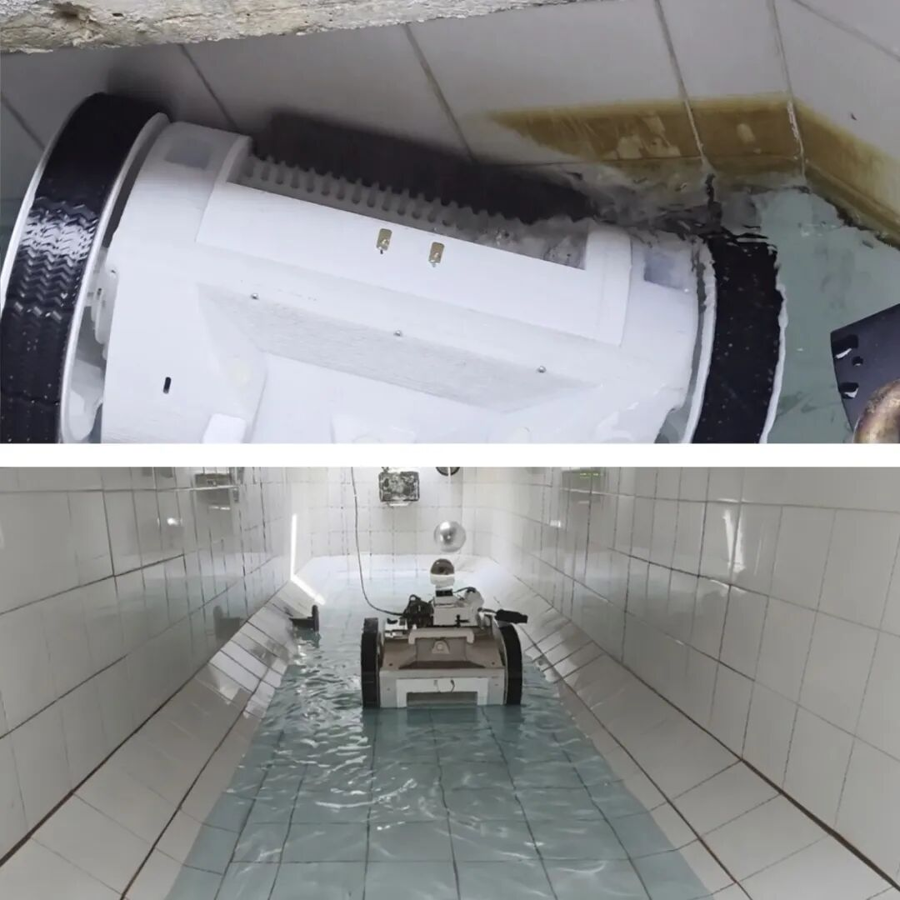
Today, their water tank cleaning robot can fully replace human workers in performing cleaning tasks inside confined spaces. The robot is currently undergoing trials in various water tanks across Hong Kong. Every time it runs, it means one thing: one worker no longer has to crawl into that dangerous space.
This robot is not flashy or fancy. It doesn't dance or chat. It's not even particularly good-looking: a white shell, a pair of rotating brushes, a handful of sensors—it looks almost like a child's toy.
But it can do one thing: walk into the most dangerous place on behalf of people, and complete the dirtiest, hardest, and most injury-prone work.
The Water Tank Cleaning Robot Features Three Core Capabilities:
- Amphibious Operation: In underwater mode, it performs submerged brush scrubbing, suction cleaning, and sediment filtration. When operating after drainage, it can perform high-pressure water spraying, disinfectant spraying, photographic documentation, and illumination. It can fully replace workers in confined-space cleaning tasks, eliminating safety risks and reducing ancillary costs associated with confined-space operations.
- Autonomous Navigation System: Whether underwater or in air, the robot can autonomously plan cleaning paths, navigate, and avoid obstacles. In tank environments with ladders, pipes, drainage outlets, and other obstructions, the robot continues to function reliably.
- AI-Based Contamination Analysis: After completing a cleaning task, the robot automatically captures internal photos of the tank and uses AI to analyse whether any contamination remains. The image results are sent to a companion app, allowing operators to inspect the tank's cleanliness remotely.
HKCRC: When Small Lights Converge, They Can Illuminate the Longest Night
William Chen reflects: "I've worked on robots for eight years. I've lived on construction sites, earned certifications, crawled through water tanks, endured countless sleepless nights, and faced failure more times than I can count. What I'm most proud of isn't the number of patents or contracts—it's the day I see workers no longer having to risk their lives entering cramped, hazardous environments.
The highest calling of technology is not to be smarter—it's to be more human. Not to make people faster, but to make them safer. It understands the taste of sweat, the weight of risk, and the silent burdens that workers bear.
HKCRC is home to many tech entrepreneurs like William Chen. What they aim to build is not just a robot—it's a safer, more respectful way of working. They transform the real risks faced by frontline workers into the highest priority in R&D.



Get In Touch
Have questions or want to explore collaboration? Reach out to our team and let’s build the future of construction together.