Xia Baolong Visits XbotPark for Research Inspection
Apr 15
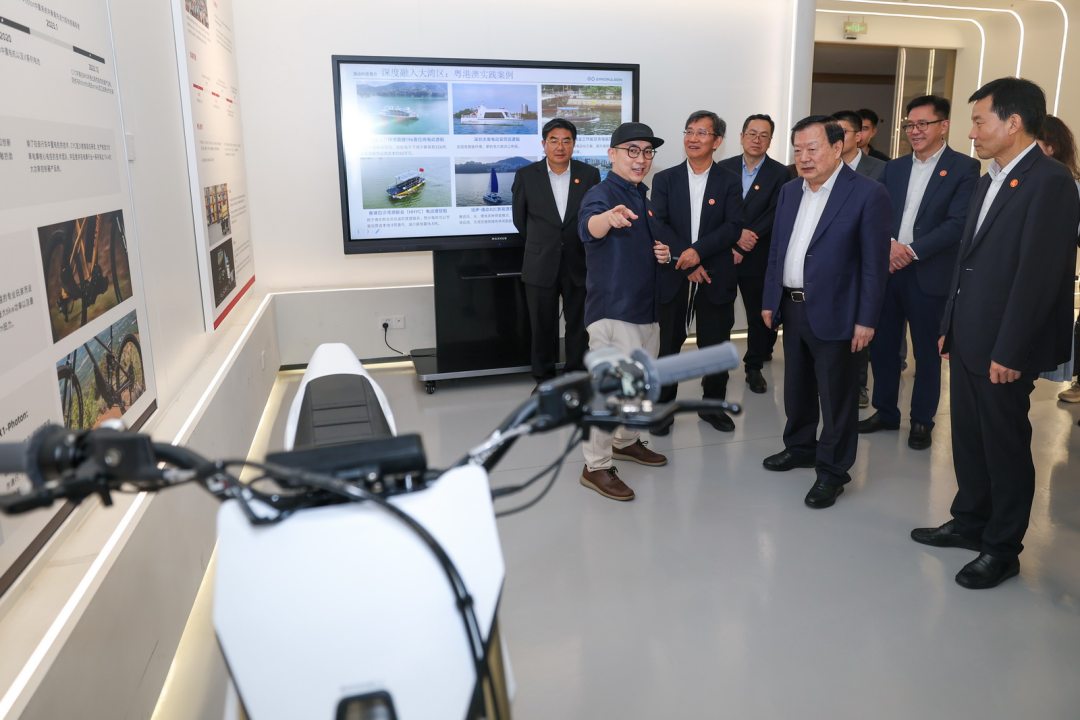
On the afternoon of April 8, 2026, during his inspection tour in Dongguan, Xia Baolong, Director of the Hong Kong and Macao Affairs Office of the Central Committee of the Communist Party of China and Director of the Hong Kong and Macao Affairs Office of the State Council, visited the XbotPark in Songshan Lake. He was accompanied by Xu Qifang, Executive Deputy Director of the Hong Kong and Macao Affairs Office of the Central Committee of the Communist Party of China and Director of the Hong Kong and Macao Affairs Office of the State Council, and Zhang Yong, Deputy Director of the Liaison Office of the Central People's Government in Hong Kong Special Administrative Region.
This visit was part of Director Xia's broader inspection tour of Guangdong-Hong Kong-Macao Greater Bay Area cities—including Shenzhen, Dongguan, and Huizhou—from April 7 to 10, 2026. The tour was conducted "with the aim of supporting Hong Kong and Macao in proactively aligning with the national '15th Five-Year Plan,' deepening their participation in the Greater Bay Area's development, and better integrating into and serving the country's overall development strategy."
Professor Li Zexiang, founder of XbotPark, accompanied the delegation throughout the visit and provided a detailed account of the base's development history and entrepreneurial incubation model. Officially launched in 2014 with the support of the Dongguan municipal government, XbotPark is built upon the core philosophy of "integrating education, talent, and science-and-innovation institutional mechanisms." Drawing on the entrepreneurial experience of predecessors and the Olin College of Engineering model, the base has advanced new engineering education reform and cultivated innovative entrepreneurial talent. It has incubated a number of hard-tech enterprises, including ePropulsion and Narwal Robotics. Among them, Cicido and Woan Technology have been listed on the Hong Kong stock market; Narwal Robotics, Hai Robotics, and several others have achieved unicorn status, with the combined valuation of leading companies exceeding US$10 billion.
Director Xia and his delegation listened intently to Professor Li's report and expressed strong endorsement of the base's talent philosophy. Director Xia remarked that the renewal of educational concepts is of paramount importance: "If we are to keep pace with global technological advancement, we must first align our educational thinking with international standards."
Since 2018, XbotPark has refined and expanded its "1 Region + 1(N) Universities + 1 Platform + 1 Park" end-to-end regional tech-innovation economic model, extending from its Songshan Lake headquarters to multiple regions across China. Bases and institutes have been established in Ningbo, Changzhou, Chongqing, Hong Kong, Shenzhen, Hunan, and beyond.
Drawing on years of experience in promoting technology innovation in Hong Kong, Professor Li systematically outlined the strengths of Hong Kong's innovation ecosystem, while also candidly addressing the challenges it faces—such as the absence of a complete upstream and downstream industrial chain, and the constraints imposed by high land rents that limit large-scale pilot and production facilities. He also shared his perspectives on potential pathways forward.
Professor Li suggested that entrepreneurial ventures could explore a "dual-headquarters" model: a Hong Kong headquarters focused on design, R&D, assembly, and sales, paired with a mainland headquarters dedicated to R&D and manufacturing. This approach would maximise the advantages of both sides while accelerating global expansion. In terms of industrial direction, he recommended focusing on sectors where Hong Kong holds a comparative advantage, such as coastal economy and smart construction.
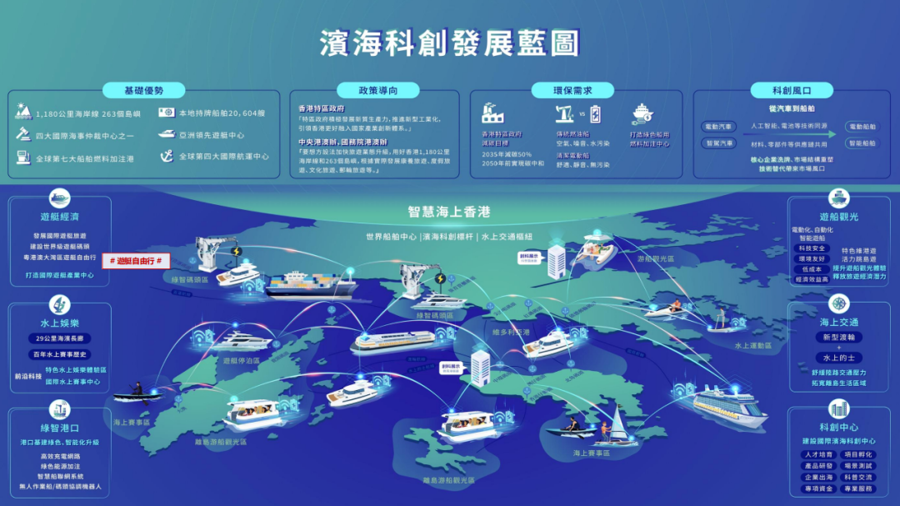
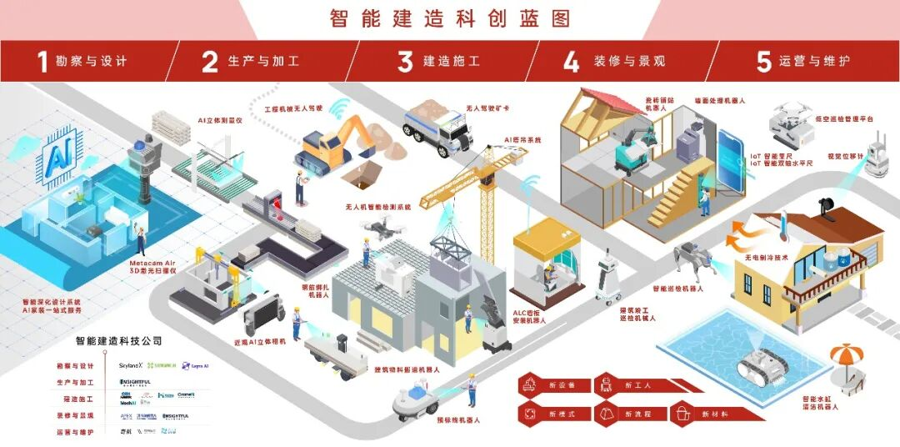
China's "15th Five-Year Plan for National Economic and Social Development" explicitly states its commitment to "supporting Hong Kong in building itself into an international centre for innovation and technology," "supporting Hong Kong and Macao in becoming hubs for top-tier international talent," and "strengthening economic, technological, and cultural cooperation between Hong Kong, Macao, and the mainland." Professor Li's recommendations align closely with these policy directives—leveraging Hong Kong's international platform and institutional strengths for design, R&D, and global sales, while drawing on the manufacturing capabilities and industrial resources of mainland Greater Bay Area cities to support large-scale production. Through synergistic collaboration and complementary strengths, both sides can jointly build a globally oriented hard-tech entrepreneurship ecosystem.
Turning to the exploration of the coastal economy, Tao Shizheng, founder and CEO of ePropulsion, briefed the delegation on the company's development journey and core business. Tao first ventured into entrepreneurship while studying at the Hong Kong University of Science and Technology, founding ePropulsion in 2012—which also became the very first enterprise to join XbotPark. At that time, the new energy wave had already swept the automotive industry, but the marine electrification sector remained largely uncharted territory. Tao keenly seized this opportunity, officially establishing ePropulsion in Hong Kong before relocating its headquarters to Songshan Lake, Dongguan. The company now operates R&D centres in Dongguan, Shenzhen, and Hong Kong.
ePropulsion specialises in integrated marine electrification solutions, replacing traditional fuel propulsion with "battery + motor + control system" systems. Its product portfolio spans a full power range from 500W to 1,000kW, serving a diverse array of vessel types, including sightseeing boats, passenger ferries, inland cargo vessels, port operations craft, government vessels, eco-friendly vessels, motor yachts/sailboats, fishing boats, and unmanned vessels.
In the electric outboard motor segment, ePropulsion has become the world's largest supplier by shipment volume. Its products are now sold in more than 60 countries and regions, with applications at renowned scenic areas including Wuhan's East Lake, Hangzhou's West Lake, Shanghai's Suzhou Creek, and Guilin's Li River, as well as in government water authorities. The company also supplies electric outboard motors for race support vessels and electric propulsion solutions for competition equipment at top-tier sailing events such as SailGP and the America's Cup.
Within the Greater Bay Area, ePropulsion has delivered several landmark projects: participating in vessel electrification projects at water-source reservoirs in Shenzhen, including Songzikeng and Luotian reservoirs, where it custom-built pure-electric patrol and security vessels to support water-quality monitoring and security patrols; contributing to the pure-electric vessel retrofit project at Heyuan's Wanlv Lake—a water source for Hong Kong via the Dongjiang River, with the first batch of vessels already in operation and five more all-electric vessels scheduled for launch this year; providing electric propulsion solutions for fishing boats on Cheung Chau Island and electric sampan propulsion for the Royal Hong Kong Yacht Club.
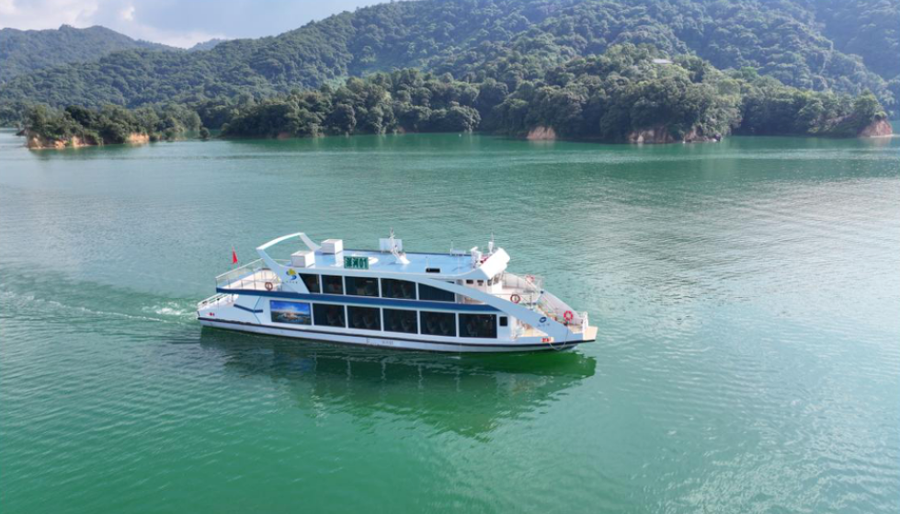
Tao noted that Hong Kong is home to tens of thousands of vessels, including yachts, ferries, and fishing boats, creating substantial demand and a vast market for waterborne electrification. ePropulsion will continue to deepen its presence in the Greater Bay Area, driving a broader green transformation of the maritime sector and serving markets across China and the world.
The story of ePropulsion exemplifies how HKUST entrepreneurial teams can take root in the Greater Bay Area and expand globally. Another XbotPark incubated company—CYC Motor—similarly demonstrates Hong Kong's strengths as a hub for international talent.
Founder Jon Chan, a Hong Kong native, ventured into entrepreneurship after graduating from the Department of Architecture at the University of Hong Kong. Starting with electric bicycle system development, he designed and exported motor systems for popular electric mountain bikes to markets worldwide. With over a decade of deep expertise in the mid-drive motor segment for e-bikes, CYC Motor's proprietary patented torque sensor system delivers a naturally responsive riding experience. In 2023, CYC Motor completed the acquisition of EBMX, officially launching a high-power electric motorcycle controller product line ranging from 5kW to 75kW. Concurrently, it established Bonnell as its complete-vehicle sub-brand and formed a strategic partnership with the US-based Ristretto team to fully enter the high-performance off-road electric motorcycle market. Its current off-road e-motorcycle products deliver up to 75 kW (approximately 100 horsepower) and accelerate from 0 to 100 km/h in under three seconds, with two complete vehicle models slated for mass production in 2026.
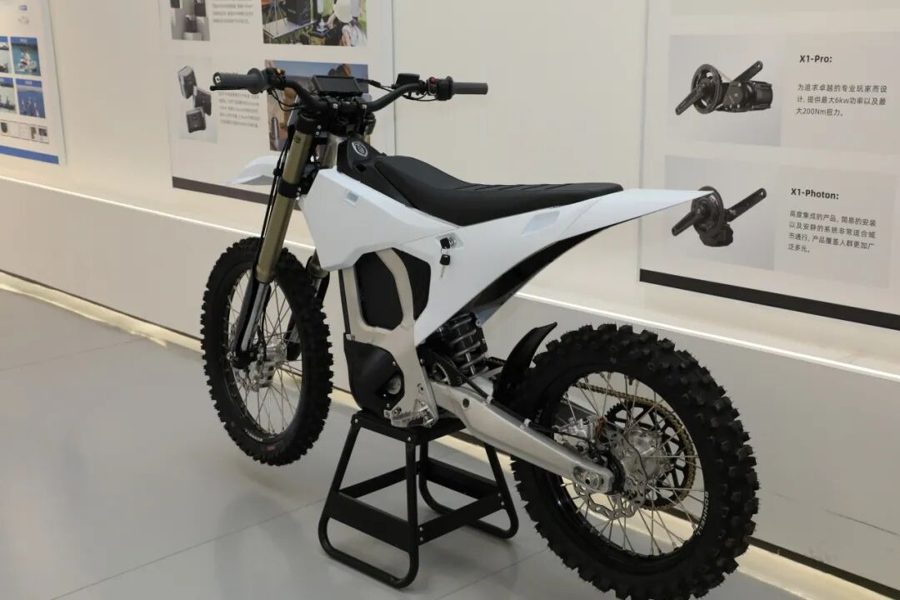
CYC Motor and its sub-brands now employ a team of approximately 130 people, nearly half of whom are foreign engineers from Europe and the US. The company operates with Hong Kong as its group headquarters; its Songshan Lake XbotPark team handles engineering implementation and supply-chain management; a complete-vehicle R&D team is based in Perth, Australia; and an Austin, Texas-based team oversees brand marketing, business development, and industrial design—forming a globally distributed, collaborative work network.
In Professor LI's view, CYC Motor is a quintessential example of deep integration between Hong Kong, Macao, and mainland advantages: leveraging Hong Kong's international talent network to attract top global engineers, while tapping into Dongguan's supply chain for rapid, high-performance product realisation. Its entrepreneurial journey charts a new path for Hong Kong-born founders to deeply embed themselves in the mainland's industrial ecosystem and reach global markets.
During the inspection, Director Xia Baolong fully affirmed XbotPark's achievements in hard-tech entrepreneurial incubation, new engineering talent development, and the promotion of Guangdong-Hong Kong-Macao science and technology innovation collaboration. He also invited Professor Li to offer policy recommendations for Hong Kong's "15th Five-Year Plan" formulation. Professor Li expressed his hope to channel XbotPark's years of accumulated incubation experience and resources toward serving Hong Kong's innovation ecosystem, helping more young entrepreneurs turn their ideas into market-ready products. With the backing of national policies and the historic opportunity presented by Hong Kong's first-ever five-year plan, XbotPark is ready to join hands with all stakeholders to contribute even more to the collaborative development of science and technology innovation across the Greater Bay Area.



Get In Touch
Have questions or want to explore collaboration? Reach out to our team and let’s build the future of construction together.